Mario-Leander Reimer
Fifty Shades of Kubernetes Autoscaling
#1about 4 minutes
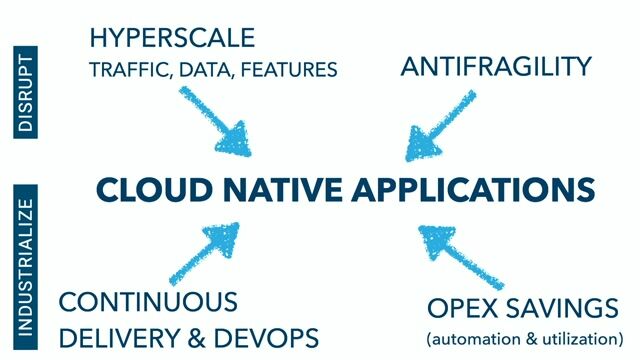
Why cloud-native systems require multi-layered elasticity
Modern applications need to be anti-fragile and support hyperscale, which requires elasticity at the workload level (horizontal/vertical) and the infrastructure level (cluster scaling).
#2about 5 minutes
How metrics and events drive Kubernetes autoscaling decisions
Autoscaling relies on events for cluster-level actions and a multi-layered metrics API for workload scaling based on resource, custom, or external data sources.
#3about 5 minutes
Implementing horizontal pod autoscaling with different metrics
The Horizontal Pod Autoscaler (HPA) can scale pods based on simple resource metrics like CPU, custom pod metrics, or external metrics from Prometheus.
#4about 2 minutes
Using the vertical pod autoscaler for right-sizing workloads
The Vertical Pod Autoscaler (VPA) can automatically adjust pod resources, but its recommendation mode is most useful for determining optimal CPU and memory settings.
#5about 4 minutes
How the default cluster autoscaler works on GKE
The default cluster autoscaler automatically provisions new nodes when it detects unschedulable pods due to resource constraints, as demonstrated on Google Kubernetes Engine.
#6about 5 minutes
Using Carpenter for fast and flexible cluster scaling on AWS
Carpenter provides a fast and flexible cluster autoscaling solution for AWS EKS, enabling cost optimization by using spot instances for scaled-out nodes.
#7about 1 minute
Exploring KEDA for advanced event-driven autoscaling
KEDA (Kubernetes Event-driven Autoscaling) enables scaling workloads, including to zero, based on events from various sources like message queues or databases.
#8about 1 minute
Summary of Kubernetes autoscaling tools and techniques
A recap of essential autoscaling components including the metric server, HPA, VPA, cluster autoscalers like Carpenter, KEDA, and the descheduler for cluster optimization.
#9about 2 minutes
Q&A on autoscaler reliability and graceful shutdown
Discussion on the production-readiness of autoscalers, the importance of observability, and how to achieve graceful pod termination during scale-down events.
Related jobs
Jobs that call for the skills explored in this talk.

Matching moments
01:55 MIN
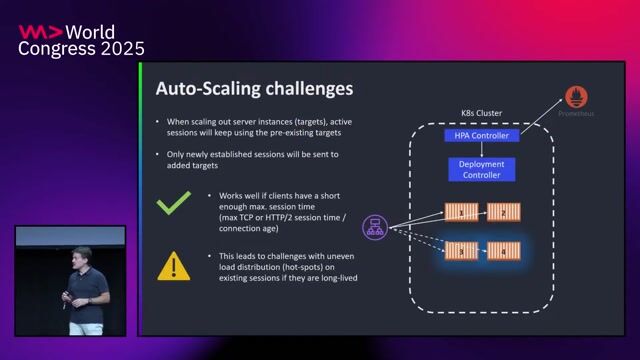
Why autoscaling gRPC services can be challenging
gRPC Load Balancing Deep Dive
Unlock full access
Log in or set up an account to access this feature and more.
02:45 MIN
Understanding the challenges of scaling Kubernetes with confidence
5 steps for running a Kubernetes environment at scale
Unlock full access
Log in or set up an account to access this feature and more.
01:54 MIN
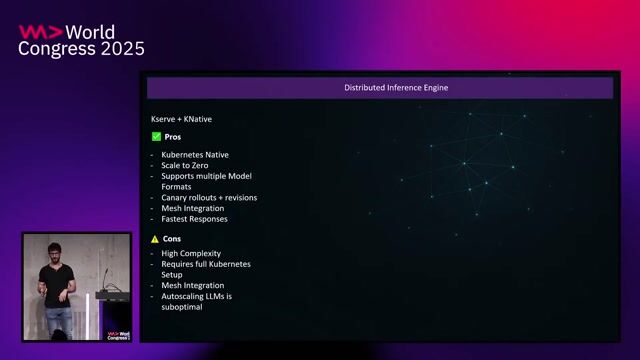
Scaling inference with Kubernetes and smart routing
Unveiling the Magic: Scaling Large Language Models to Serve Millions
Unlock full access
Log in or set up an account to access this feature and more.
07:34 MIN
Live demo of an auto-scaling event-driven application
Serverless Java in Action: Cloud Agnostic Design Patterns and Tips
Unlock full access
Log in or set up an account to access this feature and more.
03:08 MIN
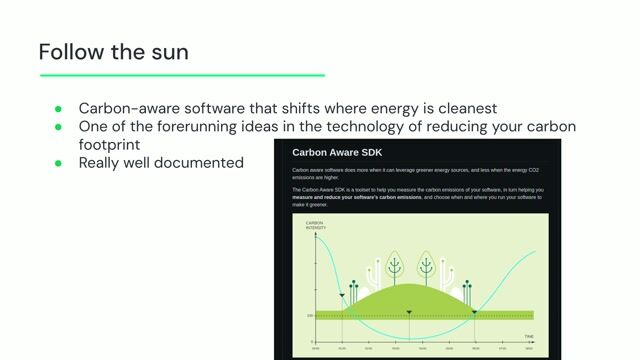
Case study on optimizing a GKE cluster
Minimising the Carbon Footprint of Workloads
Unlock full access
Log in or set up an account to access this feature and more.

04:27 MIN
How application scaling works in Cloud Foundry
CD2CF - Continuous Deployment to Cloud Foundry
Unlock full access
Log in or set up an account to access this feature and more.

00:57 MIN
Managing containers at scale with Kubernetes
#90DaysOfDevOps - The DevOps Learning Journey
Unlock full access
Log in or set up an account to access this feature and more.
03:09 MIN
Common challenges when scaling self-hosted runners
A deep dive into ARC the Kubernetes operator to scale self-hosted runners
Unlock full access
Log in or set up an account to access this feature and more.
Featured Partners
Related Videos
 42:45
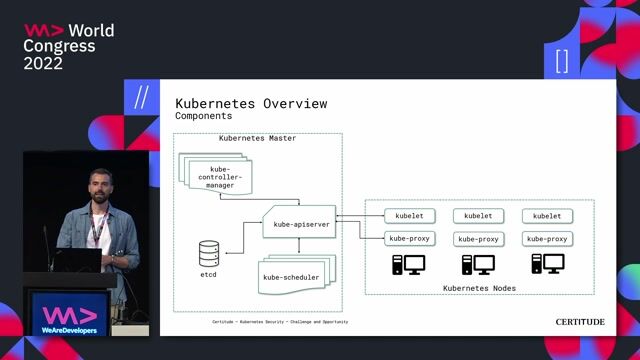
42:45Kubernetes Security - Challenge and Opportunity
Marc Nimmerrichter
 21:43
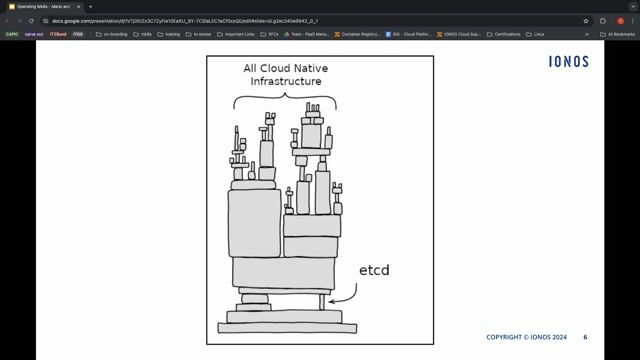
21:43Operating etcd for Managed Kubernetes
Mario Valderrama
 46:36
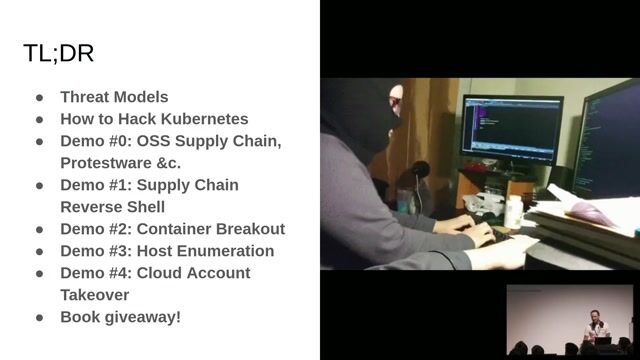
46:36Hacking Kubernetes: Live Demo Marathon
Andrew Martin
 50:51
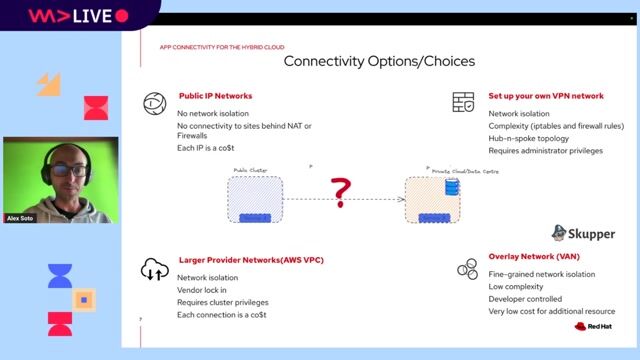
50:51Embracing the Hybrid Cloud: Unlocking Success with Open Source Technologies
Alex Soto
 28:12
28:12Scaling: from 0 to 20 million users
Josip Stuhli
 57:09
57:095 steps for running a Kubernetes environment at scale
Stijn Polfliet
 28:03
28:03Containers in the cloud - State of the Art in 2022
Federico Fregosi
 40:00
40:00Local Development Techniques with Kubernetes
Rob Richardson
Related Articles
View all articles


.gif?w=240&auto=compress,format)
From learning to earning
Jobs that call for the skills explored in this talk.


smartclip Europe GmbH
Hamburg, Germany
Intermediate
Senior
GIT
Linux
Python
Kubernetes

Mittwald CM Service GmbH & Co. KG
Espelkamp, Germany
Intermediate
Senior
Linux
Docker
DevOps
Kubernetes

iits-consulting GmbH
Munich, Germany
Intermediate
Go
Docker
DevOps
Kubernetes

AUTO1 Group SE
Berlin, Germany
Intermediate
Senior
ELK
Terraform
Elasticsearch

